
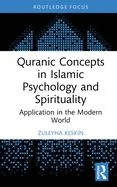
Description
By (author) Keskin, Zuleyha
Short /annotation:
This book explores how the Qur’ân’s timeless teachings enrich contemporary psychological theories, bridging the gap between Islāmic wisdom and psychological well-being.
:
This book explores how the Qur’ân’s timeless teachings enrich contemporary psychological theories, bridging the gap between Islāmic wisdom and psychological well-being.
It offers a comprehensive guide to understanding and applying Qur’ânic concepts in the realm of mental health. Grounded in Islāmic scholarship, it references both classical and modern Islāmic sources to explain fundamental Qur’ânic concepts in Islāmic psychology. The book is structured around three key areas: first, an Islāmic perspective on human faculties, essential for self-knowledge and self-awareness; second, the five pillars of Islam, which play a central role in psychological resilience; and third, various Qur’ânic spiritual concepts linked to mental well-being, such as ṣabr (patience), shukr (gratitude), riḍā (contentment) and iṭmi’nān (peacefulness).
By integrating Islāmic principles with contemporary psychological insights and promoting a holistic approach to well-being, this book serves as a vital resource for personal development, academic study, and professional practice, particularly for mental health professionals working with Muslim clients.
Table of contents:
1. The Human Faculties in the Qur’ân 2. The Five Pillars: Introduction and Qur’ânic Practice of Shahādah 3. The Five Pillars: Qur’ânic Practices of Ṣalāh and Zakāh 4. The Five Pillars: Qur’ânic Practices of Ṣawm and Ḥajj 5. Qur’ânic Spiritual Concepts of Ikhlāṣ and Tawakkul 6. Qur’ânic Spiritual Concepts of Duʿāʾ, Dhikr and Tafakkur 7. Qur’ânic Spiritual Concepts of Ṣabr, Shukr and Istiqāmah 8. Qur’ânic Spiritual Concepts of Tawbah, Istighfār, Riḍā, Sakīna and Iṭmīnān 9. Conclusion
Review quote:
”Qur’ânic Concepts in Islāmic Psychology and Spirituality is a groundbreaking work that bridges Islamic spirituality and psychology, offering a holistic understanding of human nature through the Qur’ânic lens. With clarity and depth, it explores the alignment of human faculties with fitrah, the transformative power of the five pillars, and key spiritual concepts such as ikhlas (sincerity), sabr (patience) and shukr (gratitude).
This book is an invaluable resource for those seeking to integrate faith with mental and emotional well-being. Rooted in the Qur’an and Hadith, it provides insights that are both accessible and practical, making it an essential guide for personal growth, academic study, and professional practice. A must-read for anyone seeking a deeper understanding of how connecting with Allah leads to psychological resilience.”
Professor Mehmet Ozalp, Centre for Islamic Studies and Civilisation, Charles Sturt University
”In the name of Allāh, the Most Gracious, the Most Merciful. It is with immense pleasure that I write this endorsement for a book that explores the vital field of Islāmic psychology from a Qur’ânic worldview. The author, Professor Zuleyha Keskin, is the Associate Head of School at CISAC, co-founded ISRA Australia in 2009, leading to the establishment of CISAC at Charles Sturt University, where she played a key role in developing academic programmes, including Islāmic Studies and Islāmic Psychology. Her dedicated contributions to the Muslim community in Australia have earned her the prestigious Order of Australia Medal.
I wholeheartedly endorse Qur’ānic Concepts in Islāmic Psychology and Spirituality: Application in the Modern World as a groundbreaking contribution to the field of Islāmic psychology. Professor Z




Reviews
There are no reviews yet.