
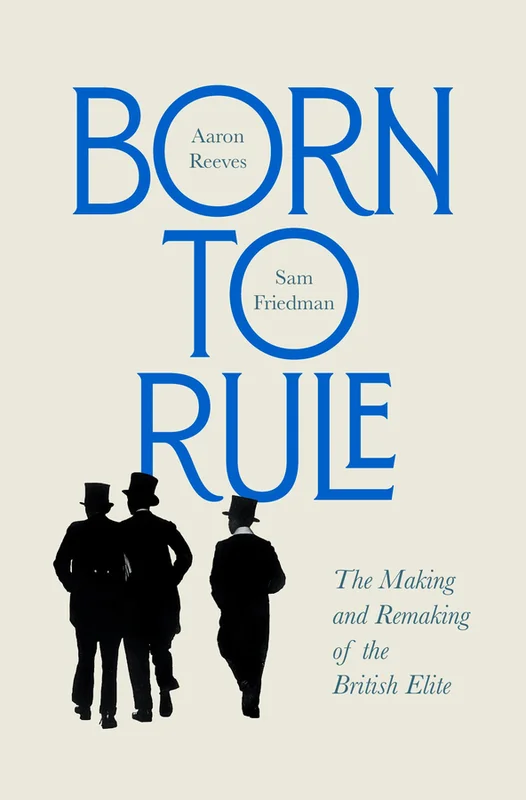
Description
By (author) Reeves, Aaron; By (author) Friedman Sam
Short /annotation:
This data-rich sociological study uses everything from census figures to Who’s Who to analyze how, over 125 years, the British elite have used status, elite education, and powerful social networks to shape politics and cultural values. But what happens when elites begin to change—in what they look like, value, and how they position themselves?
:
A uniquely data-rich analysis of the British elite from the Victorian era to today: who gets in, how they get there, what they like and look like, where they go to school, and what politics they perpetuate.
Think of the British elite and familiar caricatures spring to mind. But are today’s power brokers a conservative chumocracy, born to privilege and anointed at Eton and Oxford? Or is a new progressive elite emerging with different values and political instincts?
Aaron Reeves and Sam Friedman combed through a trove of data in search of an answer, scrutinizing the profiles, interests, and careers of over 125,000 members of the British elite from the late 1890s to today. At the heart of this meticulously researched study is the historical database of Who’s Who, but Reeves and Friedman also mined genealogical records, examined probate data, and interviewed over 200 leading figures from a wide range of backgrounds and professions to uncover who runs Britain, how they think, and what they want.
What they found is that there is less movement at the top than we think. Yes, there has been some progress on including women and Black and Asian Brits, but those born into the top 1 percent are just as likely to get into the elite today as they were 125 years ago. What has changed is how elites present themselves. Today’s elite pedal hard to convince us they are perfectly ordinary.
Why should we care? Because the elites we have affect the politics we get. While scholars have long proposed that the family you are born into, and the schools you attend, leave a mark on the exercise of power, the empirical evidence has been thin—until now.
Review quote:
Thank God for Friedman and Reeves, sociologists at the LSE and Oxford University respectively, who run a superbly dispassionate scalpel through Britain’s upper crust to expose the cultural interests, political views and social origins of the 21st-century elite…[they] tell a compelling story of cultural change…[this is] a book rich in insight, data and original thought. Connoisseurs of hypocrisy and self-delusion will find much to savour too.
Review quote:
A very good new book…authors Aaron Reeves and Sam Friedman…have done fascinating work on the family backgrounds of current cabinet and shadow cabinet members and arrived at some remarkable findings.
Review quote:
[Reeves and Friedman] describe how their country’s elites have changed since the 19th century, becoming cleverer and better at presenting themselves as ordinary. The book, flush with research, including more than 200 interviews, is superb.
Review quote:
Through their analysis of schooling, hobbies and background from Who’s Who, a questionnaire of several thousand of its living members, and deeper interviews with several hundred more, Friedman and Reeves have built up an impressive longitudinal study of the British upper crust…[this book] is an important attempt to take the measure of our new and evolved elite…the achievement of this fascinating book should be to spark a broader reconsideration of our new ruling caste.
Review quote:
Superb…Born to Rule…track[s] the pseudo-egalitarian drift of the modern establishment…Those in power have never been keener to signal their relatable, meritocratic credentials.
Review quote:
[A] timely and important book. [Reeves and Friedman] sketch t


Reviews
There are no reviews yet.