
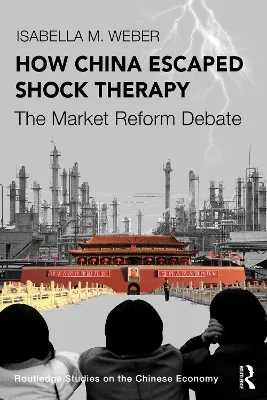
Description
By (author) Weber, Isabella M.
Short /annotation:
China has become deeply integrated into the world economy. Yet, gradual marketization has facilitated the country’s rise without leading to its wholesale assimilation to global neoliberalism.
:
China has become deeply integrated into the world economy. Yet, gradual marketization has facilitated the country’s rise without leading to its wholesale assimilation to global neoliberalism. This book uncovers the fierce contest about economic reforms that shaped China’s path. In the first post-Mao decade, China’s reformers were sharply divided. They agreed that China had to reform its economic system and move toward more marketization—but struggled over how to go about it. Should China destroy the core of the socialist system through shock therapy, or should it use the institutions of the planned economy as market creators? With hindsight, the historical record proves the high stakes behind the question: China embarked on an economic expansion commonly described as unprecedented in scope and pace, whereas Russia’s economy collapsed under shock therapy. Based on extensive research, including interviews with key Chinese and international participants and World Bank officials as well as insights gleaned from unpublished documents, the book charts the debate that ultimately enabled China to follow a path to gradual reindustrialization. Beyond shedding light on the crossroads of the 1980s, it reveals the intellectual foundations of state-market relations in reform-era China through a longue durée lens. Overall, the book delivers an original perspective on China’s economic model and its continuing contestations from within and from without.
Table of contents:
Introduction
Part I: Modes of Market Creation and Price Regulation
1. China’s Tradition of Bureaucratic Market Participation: Guanzi and the Salt and Iron Debate
2. From Market to War Economy and Back: American Price Control during World War II and Its Aftermath
3. Re-creating the Economy through State Commerce: Price Stabilization and the Communist Revolution
Part II: China’s Market Reform Debate
4. The Starting Point: Price Control in the Maoist Economy and the Urge for Reform
5. Rehabilitating the Market in Theory and Practice: Chinese Economists, the World Bank, and Eastern European Émigrés
6. Market Creation versus Price Liberalisation: Rural Reform, Young Intellectuals and the Dual-Track Price System
7. Debunking Shock Therapy: The Clash of Two Market Reform Paradigms
8. Escaping Shock Therapy: Causes and Consequences of the 1988 Inflation
Conclusion
Review quote:
German edition winner of the Hans Matthöfer Prize for Public Writing in Economics 2024, awarded by the Friedrich Ebert Foundation
Winner of the 2021 Joan Robinson Prize awarded by the European Association for Evolutionary Political Economy.
Winner of the 2022 Best Book in Interdisciplinary Studies Award of the International Studies Association.
One of the most consequential economic debates in China over the direction of reform took place in the 1980s and focused on how markets should be created. The outcome of that debate set the pattern for much of China’s subsequent economic reforms. Isabella Weber, drawing on interviews of the participants and others together with many new sources of unpublished and published information, does a masterful job of explaining how this debate evolved and its ultimate impact.
DWIGHT H. PERKINS, Harvard University, Director of the Harvard Institute for International Development, 1980–1995
This superb book presents the most compelling interpretation I have read of the sources of Chinese gradualism and its success in fostering economic growth and transformation while preservin




Reviews
There are no reviews yet.