
Description
By (author) Simonsohn, Uriel
Short /annotation:
Female Power and Religious Change in the Medieval Near East examines interrelatedly the Islamization of the Near East and the place of women in pre-modern Near Eastern societies.
:
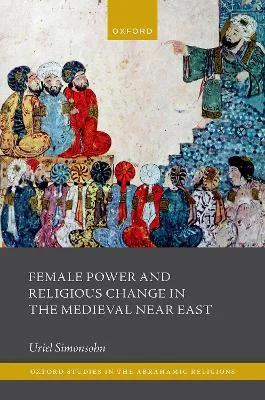
Female Power and Religious Change in the Medieval Near East engages with two levels of scholarly discussion that are all too often dealt with separately in modern scholarship: the Islamization of the Near East and the place of women in pre-modern Near Eastern societies. It outlines how these two lines of inquiry can and should be read in an integrative manner. Major historical themes such as conversion to Islam, Islamization, religious violence, and the regulation of Muslim/non-Muslim ties are addressed and reframed by attending to the relatively hidden, yet highly meaningful, role that women played throughout this period.This book is about the history of Islam from the perspective of female social agents. It argues that irrespective of their religious affiliation, women possessed crucial means for affecting or hindering religious changes, not only in the form of religious conversion, but also in the adoption of practices and the delineation of communal boundaries. Its focus on the role and significance of female power in moments of religious change within family households offers a historical angle that has hitherto been relatively absent from modern scholarship. Rather than locating signs of female autonomy or authority in the political, intellectual, religious, or economic spheres, Female Power and Religious Change in the Medieval Near East is concerned with the capacity of women to affect religious communal affiliations thanks to their kinship ties.
Table of contents:
AcknowledgementsNote on transliteration systems, translations, dates, and referencesList of abbreviationsIntroduction1: Contours of Family Dynamics2: ”Even though it be against yourselves, or your parents and kinsmen” (Q 4:135)-The Prioritization of God over Family3: Religiously-Mixed Families as Sites of Competing Religious Traditions4: ”No bearer of burdens will bear the burden of another” (Q 53:38)-The Liminal Position of Women in Religiously-Mixed Families5: Female Conversion to Islam-Religious Defiance and Feminine Resistance6: Precarious Gatekeepers-Female Power and Religious ConflictConclusionBibliographyPrimary LiteratureList of Geniza documentsSecondary Literature
Biographical note:
Uriel Simonsohn is Senior Lecturer in the department of Middle Eastern and Islamic Studies at the University of Haifa. At present, he also serves as head of the Haifa Laboratory for Religious Studies. He has previously held fellowships at the Martin Buber Society of Fellows at Hebrew University (2010-2013), the Center of Excellence at the University of Konstanz (2016), the Helen Gartner Hammer Program at the Hadassah-Brandeis Institute (2017), Wolfson College, University of Oxford (2019), and the Israel Institute for Advanced Studies (2020-2021).
Publisher’s notice:
Uriel Simonsohn is Senior Lecturer in the department of Middle Eastern and Islamic Studies at the University of Haifa. At present, he also serves as head of the Haifa Laboratory for Religious Studies. He has previously held fellowships at the Martin Buber Society of Fellows at Hebrew University (2010-2013), the Center of Excellence at the University of Konstanz (2016), the Helen Gartner Hammer Program at the Hadassah-Brandeis Institute (2017),Wolfson College, University of Oxford (2019), and the Israel Institute for Advanced Studies (2020-2021).
Version history:
Provides the first comprehensive study of female power in the framework of the family during a period that was crucial for the formation of Islamic civilizationGives a comprehensive consideration of the place of women in the Islamization of the early and medieval Near EastAnalyses a br




Reviews
There are no reviews yet.